Hacker Newsnew | past | comments | ask | show | jobs | submit | jbit's commentslogin

Have you released your reverse engineered endoscope camera work? It's something I've been thinking about doing myself, since the vendor apps leave a lot to be desired.


Yes! https://pypi.org/project/supercamera/

Feel free to contribute [0], let me know if it works with the cameras you have or not, etc.! Cheers

[0] https://github.com/Revise-Robotics/supercamera-endoscope


Hightec also have an ISO26262 qualified compiler focused on automotive: https://hightec-rt.com/rust

So there's lots of focus on having a good alternative to C/C++


There were a few vendor-specific VLBish busses:

Opti local bus was the most common, and had a few different boards: https://ancientelectronics.wordpress.com/tag/opti-local-bus/

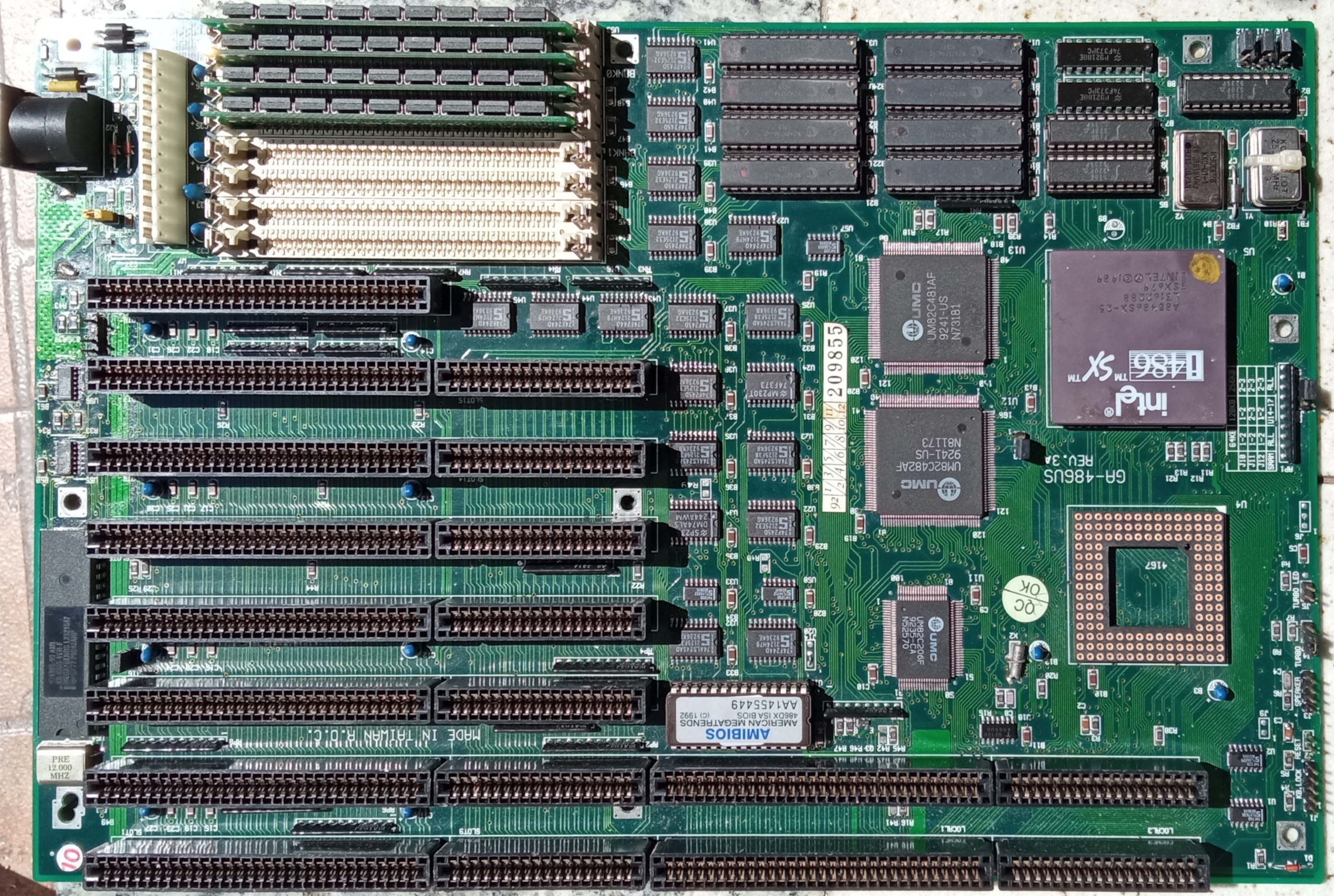
Gigabyte had one that was only used for the "GA-486US" motherboard. The connector was just two 16bit ISA cards back to back: https://theretroweb.com/motherboard/image/ga-486us-front-60b...

I believe there were some others from different vendors.

The signaling for all of these was pretty similar to VLB, since it was just the 486 bus on a connector.


Check out the `--shutter` option for `libcamera-vid`, it allows you to tweak the camera's exposure time which might help with the screen refresh banding. `--shutter 60` sets the exposure time to 60ms, which might be a good starting point.

EDIT: Ah, actually the unit is microseconds, so `60000` would be 60ms


Hey thanks, this was a good catch. `--shutter 12000` fixes the screen, and is bright but not too bright.


https://web.archive.org/web/20230719185342/https://libreboot...

For context, this is the page the cease and desist was referring to.


I wonder how legit this site is. It says:

> These SVG images were created by modifying the images of Pixabay.

And indeed, the images seem to be taken from pixabay (e.g. [0], [1]), however the pixabay license is NOT CC0, and specifically forbids redistribution [2]:

> Don't redistribute or sell Pixabay content on other stock or wallpaper platforms.

[0]: https://svgsilh.com/image/1801287.html

[1]: https://pixabay.com/vectors/grooming-cat-kitty-kitten-feline...

[2]: https://pixabay.com/service/license/


You're accusing without due research. The image on the pixabay site is from 2016, while the license it used until late 2018 was CC0: https://www.sugarfire.net/pixabay-license-change-no-longer-a...


Redistibution on stock platforms is not allowed for pixabay content. Terms don’t say anything about edited Pixabay content.


I'll go out on a limb and say "not legit at all", and would probably want to run it in a sandbox before downloading any links


Without presenting any evidence, your comment sounds like pure prejudice. The site has its few problems:

  - 2 advertisements and
  - link to facebook.
Besides that it is:

one of listed filters in creative commons search: https://search.creativecommons.org/search?q=trust&license=cc... ,

does not insist to became a member,

has no paid premium features,

very clean,

no sketchy ads,

no intrusive popups,

default presentation is not the most "clicked items",

and has no links to any suspect site.

I can't really see why it looks "'not legit at all', and would probably want to run it in a sandbox before downloading any links".


Or even find the /etc/shadow contents in the hexeditor and empty the root password field. Searching for "root:" usually gets you to the right place.

Most *nix systems are happy if you pad the left over bytes with newlines, so there's no need to mess with the filesystem metadata or anything like that. :D


I'd never heard of this documentary, so I took a look. I assume you meant "The Bit Player"? ( https://www.imdb.com/title/tt5015534/ ). It looks interesting, and it's on Amazon prime video so I'll give it a watch. Thanks!


Sorry, you are right.


Adding to this:

f-droid also encourages reproducible builds: https://f-droid.org/en/docs/Reproducible_Builds/

This means you can verify the APK on the f-droid store matches what's in github by building it yourself and comparing the signatures.

And if you want to do this, f-droid has an automated way: https://f-droid.org/en/docs/Verification_Server/ Of course, you still have to trust the verification server source code, but that runs locally on your hardware and is auditable.


Guidelines | FAQ | Lists | API | Security | Legal | Apply to YC | Contact

Search: